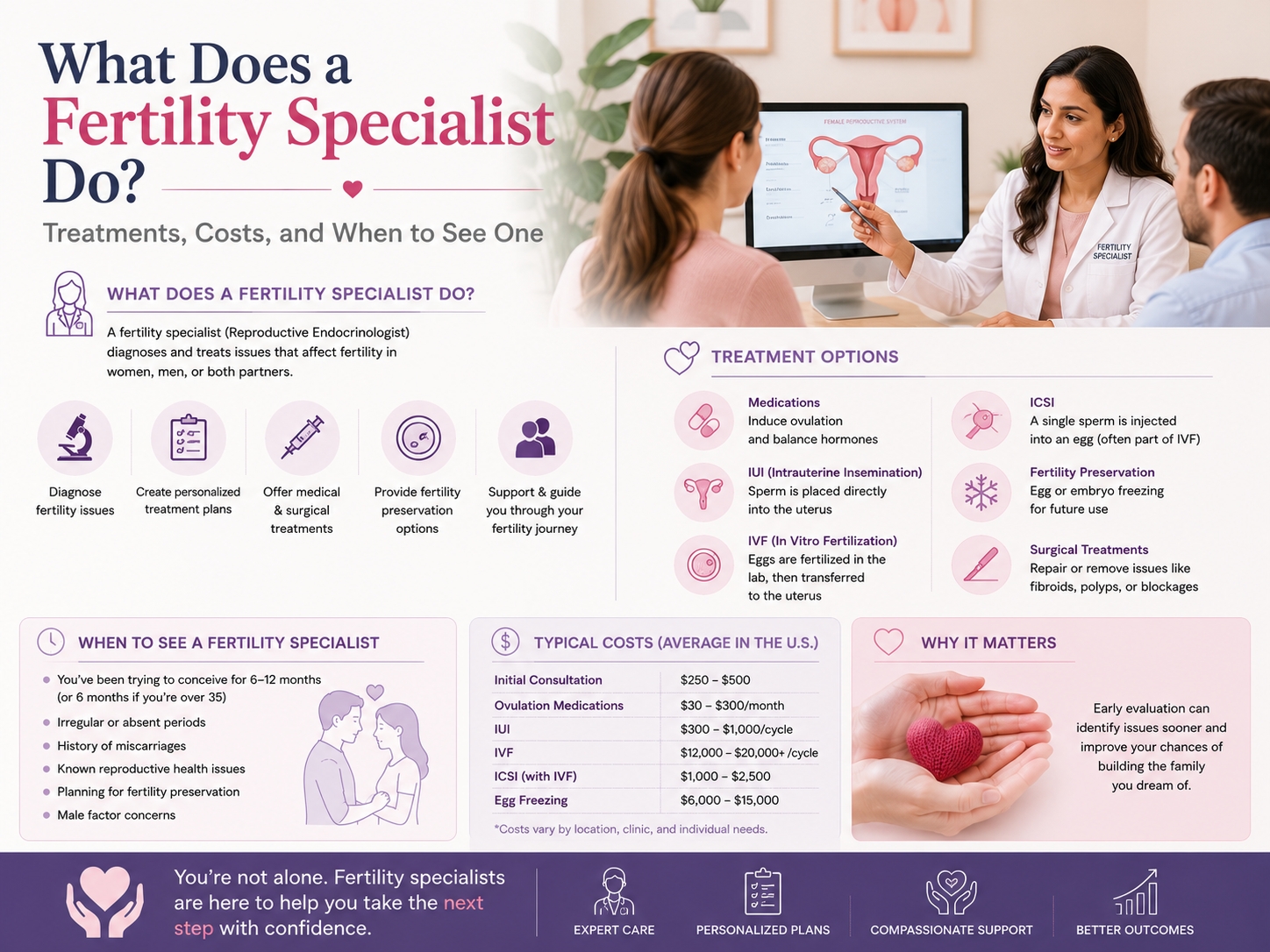
A fertility specialist is a physician who has expertise in diagnosing and treating the disorders of the reproductive system that impact fertility and conception. They assess couples, discover the reason behind their fertility problems, and suggest individual treatments like ovarian stimulation, intrauterine insemination (IUI), in vitro fertilization (IVF) or fertility preservation. Getting an early appointment with a fertility specialist could save a lot of time for the patients.
Often, individuals look for a “fertility specialist near me” after many months or even years of confusion and hopelessness. However, it is important to learn about the work of these specialists and what conditions might require a visit. That way, the process of fertility treatment will become easier for the patient.
What Is a Fertility Specialist?
The fertility doctor is alternatively referred to as a reproductive endocrinologist, which is an OB-GYN with extensive training in infertility and reproduction. The fertility specialists treat and diagnose issues related to fertility in both males and females.
Some of the common issues that require the assistance of such specialists include:
- PCOS and ovulatory problems
- Endometriosis
- Low sperm count or low sperm motility
- Recurrent miscarriages
- Imbalances in hormones
- Unexplained infertility
- Decline in fertility due to age
Preservation of fertility before undergoing treatments
It is an important truth that most patients do not seem to know, but infertility is not just a problem for women. Nearly 40 to 50% of the fertility issues can be attributed to male infertility.
When Should You See a Fertility Specialist?
Consider visiting a specialized fertility center if you:
- Are younger than 35 and have been trying for 12 months but cannot conceive
- Are over 35 and have tried for six months
- Have irregular or absent periods
- Have a history of multiple miscarriages
- Have reproductive diseases such as PCOS or endometriosis
- Are interested in egg freezing
- Have a history of pelvic surgery, chemotherapy, and hormonal imbalances
In the treatment of fertility issues through clinical practices, early assessment saves a lot of time. Most individuals assume that it is stress causing their inability to conceive, while there may be other problems involved.
What Happens During a Fertility Evaluation?
The first visit to the fertility specialist revolves around your medical history, reproductive history, and lifestyle habits.
Some of the tests include:
- Blood tests for hormone levels
- Ovulation monitoring
- Pelvic ultrasound
- Ovarian reserve tests (AMH levels)
- Sperm test
- Fallopian tube test (HSG)
Diagnostic tests take place over the course of one menstrual period. The specialist evaluates the findings and formulates a treatment plan tailored to your age, diagnosis, and reproductive needs.
At Fertility Whisperer™, it is advised that patients get as many questions as possible answered during consultations regarding their treatment plans.
Common Treatments Offered by Fertility Specialists
But not all patients require IVF as the first option of treatment.
Ovulation Induction
When the female body doesn’t ovulate normally, certain drugs such as Letrozole or Clomid can help to stimulate the ovulation process.
It is usually advised to PCOS patients and is used along with cycle monitoring and timed intercourse over several months.
Intrauterine Insemination (IUI)
In this method, the processed sperm is placed in the uterus of the woman during the ovulation period.
It may be required in case of:
- Mild male factor infertility
- Ovulatory dysfunction
- Cervical factors
- Unexplained infertility
The success rate varies based on age and diagnosis; however, many fertility centers claim an average success rate of 10-20% per cycle.
In IVF, eggs are retrieved and fertilized in the laboratory and then transferred to the uterus.
A fertility doctor may suggest IVF in the following cases:
- Blocked fallopian tubes
- Severe male factor infertility
- Maternal age
- Treatment failure
- Need for genetic testing
An average cycle of IVF takes about 6-8 weeks. Specialist fertility makes ethical estimations of the result and doesn’t guarantee anything.
Fertility Preservation
Egg freezing and embryo freezing allow patients to preserve reproductive potential for the future.
This option is increasingly common among patients delaying parenthood for personal, medical, or career-related reasons.
How Much Does Fertility Treatment Cost?
One of the main concerns of people trying to find a fertility doctor in San Jose or anywhere else in the US is the price factor.
Typical cost range brackets are:
- Consultation fee: $200-$500
- Fertility tests: $500-$3,000
- IUI treatment: $300-$4,000
- IVF treatment: $12,000-$25,000+
- Egg freezing: $6,000-$15,000
Medical costs are typically charged separately and could heavily influence the overall treatment costs.
A reputable fertility clinic should provide transparent information regarding the price and financial arrangements prior to starting
How to Choose the Right Fertility Specialist
Finding “fertility specialists near me” online may seem daunting due to all the similar services that clinics provide. Nonetheless, experience, mode of communication, and transparency make all the difference.
Here is what you need to consider when selecting your fertility specialist:
- Check whether they have been certified in reproductive endocrinology
- Inquire on the clinic’s success rates and laboratory accreditation
- Consider patient reviews
- Understand the cost of all treatments
Select a clinic that explains everything without pushing you into action.
The Emotional Side of Fertility Care
However, fertility therapy is not limited to physiological interventions, there is an emotional side too, and many patients are experiencing fear, frustration or difficulties in their relationships.
Well experienced fertility experts are aware of that, and quite often recommend counseling, stress-reduction techniques and support groups in addition to physical therapy.
At Fertility Whisperer™ patient education and emotional support are deemed to be very important aspects of fertility treatment.
Author Bio
Dr. Shasta Ericson is a reproductive health and fertility expert specializing in personalized fertility care, hormone balance, and evidence-based reproductive treatments. Through Fertility Whisperer™, Dr. Ericson helps individuals and couples better understand infertility, explore treatment options, and make informed reproductive health decisions with confidence and clarity.
Conclusion
A fertility specialist will help understand what is going on medically speaking in terms of infertility, and develop a customized treatment plan for you. Be it ovulation therapy, IUI, IVF or fertility preservation, early evaluation will help define and structure your further steps.
If you have not managed to conceive or simply want to get more information about your reproductive system, consulting a specialist is the way to go.
FAQs
What Conditions Does a Fertility Specialist Treat?
A fertility specialist treats infertility, hormonal imbalances, ovulation problems, male-factor infertility, recurrent pregnancy loss, and any other condition that is interfering with conception.
How Long Will It Take to Have My Fertility Testing Done?
Most fertility testing can be done within 2-6 weeks based on menstrual cycle timing and test requirements.
Do I Need IVF?
No. There are many patients who conceive without IVF using lifestyle modification, ovulation treatment, or intrauterine insemination.
When Should I See a Fertility Specialist?
If you are under age 35, you should seek help if you have been trying for one year, but if you are older than 35, you may want to consider six months of trying.
Leave a Reply