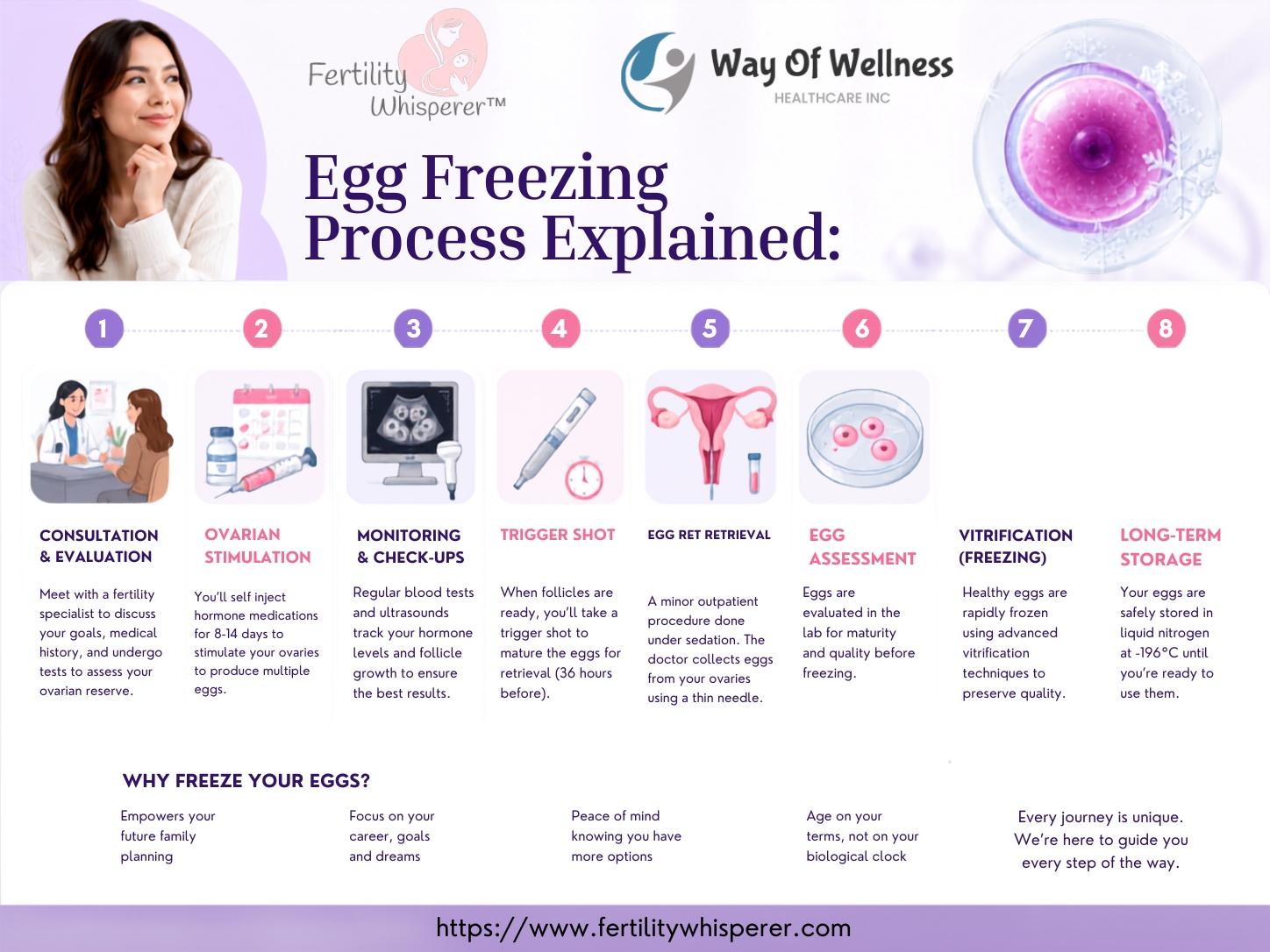
Yes, eggs can be frozen. You can freeze eggs, in case you weren’t sure. Egg freezing is a proven fertility preservation procedure, which enables women to preserve healthy eggs for future use. It takes two to three weeks to carry out the process, which includes fertility testing, ovarian stimulation, egg retrieval and long-term storage.
If you’re thinking about your career, not yet ready to start a family, or you have a medical condition that could impact your fertility, knowing about the egg freezing procedure will help you make an informed and confident choice!
Understanding Egg Freezing
The procedure of collecting, freezing and storing eggs for future pregnancies is called egg freezing or oocyte cryopreservation. The eggs are not fertilized until they are thawed and mixed with the sperm during the IVF cycle.
In the past ten years, progress in freezing technology has made egg freezing a more viable fertility preservation alternative with the ability to produce a higher percentage of eggs that survive after thawing.
Many women come to Fertility Whisperer™ looking for egg freezing since they would like to have more flexibility in family planning without compromising on their future options for fertility.
Why Do Women Freeze Their Eggs?
Some of the many reasons women prefer freezing eggs are:
- Pregnancy for personal or career reasons
- Not having a partner at this time
- Preparing for fertility preservation before cancer treatment.
- Treatment of medical conditions which could interfere with ovarian function
- Early menopause is more common in families where a mother or sister had an early menopause.
- Desire to have more children later in life
A healthy woman, for instance, in her 30s, may choose to freeze her eggs before her ability to conceive naturally begins to diminish in her late 30s.
Step 1: Initial Fertility Consultation
The initial fertility consultation is the first step.
The first step in the freezing egg process is to meet with a fertility specialist.
Your doctor will:
- Have a medical history review.
- Discuss family-building goals
- Explain the procedure
- Give some short answers to questions about success rates.
- Review of expected timings and costs
In addition, you might have fertility testing like the following:
Hormone Testing
Hormones that are measured in a blood test include:
- AMH (Anti-Müllerian Hormone)
- FSH (Follicle-Stimulating Hormone)
- Estradiol
These tests can offer information about the number of eggs one might produce and ovarian reserve.
Ultrasound Evaluation
A transvaginal ultrasound is performed to count the number of antral follicles, which is done to assess the number of eggs that might be retrieved during a cycle.
Realistic Timeline
The time that women spend completing consultation and testing varies from 1-2 weeks before treatment begins.
Step 2: Ovarian Stimulation
After the tests are done, the process of ovarian stimulation is started.
A woman’s ovary produces one egg each month. When a woman freezes her eggs, the medications used to stimulate the ovary cause it to make several mature eggs in one cycle.
Daily Hormone Injections
Patients usually self-inject their hormones to last for about 8-14 days.
These drugs cause several follicles to develop at the same time.
A lot of women are afraid of injections, but it’s a process they can handle after they’re properly instructed on by the fertility team.
Monitoring Appointments
A number of monitoring visits will be scheduled during the stimulation process.
These appointments include:
- Blood work
- Ultrasounds
- Adjustments to medication if necessary
Monitoring helps you keep track of the safe and proper growth of follicles.
Common Side Effects
Some women experience:
- Mild bloating
- Fatigue
- Breast tenderness
- Temporary mood changes
These typically go away a few days after egg collection.
Step 3: Trigger Shot Preparation
Once your follicles are the correct size, your fertility doctor will schedule a trigger injection.
This injection helps the eggs mature to the end stage before they are retrieved.
The timing is very critical. The egg retrieval procedure is typically performed about 34 – 36 hours after the trigger shot.
Your fertility clinic will give you precise instructions to get best results.
Step 4: Egg Retrieval Procedure
The procedure to retrieve the eggs is a relatively simple outpatient procedure carried out in a state of light sedation.
What is Happening in Retrieval?
With the aid of ultrasound, the doctor guides a thin needle through the vagina to the ovary.
The fluid from each of the follicles is withdrawn and the eggs are immediately examined by the embryologists who select and isolate the eggs.
The time for this task depends on the item in question.
The procedure typically takes:
15 to 30 minutes
Generally, it will take 1 to 2 hours for recovery.
The majority of patients are discharged on the same day.
Recovery Expectations
A majority of women find themselves feeling:
- Mild cramping
- Light spotting
- Temporary bloating
Most are able to resume normal daily activities in 24 to 48 hours.
Step 5: Egg Freezing and Storage.
Once a collection has been made, the embryologists examine the maturity of the egg.
A process known as “vitrification” is used to freeze only mature eggs.
What Is Vitrification?
Vitrification is a very fast freezing method which does not allow the formation of ice crystals.
Egg survival rates after thawing have been greatly enhanced with this technology.
After being frozen, eggs are kept in special tanks at very cold temperatures.
Evidence indicates frozen eggs can be stored for numerous years without appreciable loss of quality.
What is the best number of eggs to freeze?
The number is dependent on age and fertility objectives.
Generally:
- A woman under 35 can try to reach 10-20 mature eggs.
- Women over 35 may need more eggs to have as many pregnancies in the future as they did in their past.
Testing results will enable your fertility specialist to make a personal recommendation.
For instance, a 30-year-old woman who has been able to collect 18 mature eggs might have better reproductive prospects than a 39-year-old who has collected 18 mature eggs.
Egg Freezing Cost: How Much is It?
A common query that patients have is regarding the expenses of egg freezing.
The costs may vary depending on the clinic, location, medication and storage fees.
Common costs may be related to:
- Initial consultation
- Fertility testing
- Stimulation medications
- Egg retrieval procedure
- Laboratory fees
- Annual storage fees
Many clinics will also allow you to pay monthly, or finance your treatment to make it more affordable.
Costs can be very different, so be sure to ask for a breakdown of the fees before beginning treatment.
What’s the Success Rate?
There are a number of factors that are critical to success:
- Age at freezing
- The number of eggs that have been frozen is
- Egg quality
- Overall reproductive health
Overall, the younger the age at which eggs are frozen, the better the results will be for the future.
It is crucial to realize that egg freezing will provide more chances for reproduction in the future, but it does not guarantee pregnancy.
An honest fertility specialist will talk to you about what is possible for you.
Practical Tips Before Starting Egg Freezing
These are some practical tips for those who want to freeze their eggs:
Make an appointment for a Fertility
Testing can give you information on your fertility status even if you’re not ready to start right away.
Understand Your Timeline
Retrieval is typically 2-3 weeks after the medication has been taken.
If you’re going to go the whole nine yards, you must budget for the whole thing.
Examine treatment costs as well as long-term storage costs.
Maintain Healthy Habits
Before treatment:
- Avoid smoking
- Limit alcohol
- Eat a well-balanced diet.
- Prioritize sleep
These lifestyle factors contribute to good reproductive health.
Ask Questions
Remember to check:
- Expected egg numbers
- Success rates
- Medication schedule
- Total costs
Communication helps to minimize stress during the process.
Final Thoughts
Egg freezing can give women the chance to maintain their fertility and provide greater choices for future family planning. Knowing what to expect during each of the stages from consultation to ovarian stimulation to retrieval and storage can help reduce the stress and anxiety when undergoing IVF.
So, can you freeze eggs? Absolutely; and today’s technology offers a safe alternative for many women to preserve their fertility. The first step is to discuss your case with a fertility specialist with experience in this area who can help you determine the best course of action.
Author Bio
Dr. Shasta Ericson, MD – Fertility Specialist
Dr. Shasta Ericson is a board-certified fertility specialist with extensive experience in reproductive endocrinology, fertility preservation, IVF, and women’s reproductive health. Through her work with Fertility Whisperer™, she helps individuals and couples navigate fertility decisions with evidence-based guidance, compassionate care, and personalized treatment strategies. Dr. Ericson is dedicated to educating patients about fertility preservation options, including egg freezing, so they can make informed decisions about their future family-building goals.
Frequently Asked Questions
Is it possible to freeze eggs at any age?
Yes technically, but usually the better the results the younger the age of the eggs (before 35 is ideal).
How long does it take to freeze an egg?
The treatment cycle lasts about 2-3 weeks from the beginning of treatment to the egg collection.
Will egg retrieval hurt?
Usually carried out under sedation. Most women will not feel any great pain after but will feel discomfort.
What is the best number to freeze?
This number varies with age and goals of the family in the future. Your fertility specialist will give you specific suggestions.
How much does an average egg freezing cost?
The fees will depend on the clinic and the location. During a consultation, they will be able to give you an individual quote for treatment.
Do frozen eggs have a long shelf-life?
The evidence at present indicates that with proper storage, eggs will not suffer appreciable loss in quality when stored for long periods in the frozen state.
Leave a Reply