Tag: #IVFTreatment

  • What Is Vitro Pregnancy? IVF Cost, Process & In Vitro Fertilization Explained

    What Is Vitro Pregnancy? IVF Cost, Process & In Vitro Fertilization Explained

    IVF pregnancy, or in vitro pregnancy, is a pregnancy that is created via In Vitro Fertilization (IVF) in which an egg and sperm are united in a laboratory and then transferred to the uterus. IVF is one of the most successful fertility treatments of today, and has enabled millions of people and couples to create their families. Treatment costs, treatment procedures, and success rates may differ with age, fertility and treatment.

    Understanding What Is Vitro Pregnancy 

    When considering fertility treatment options, many people look into what is vitro pregnancy. The word “vitro” is derived from the Latin “in glass”. In modern medicine it means fertilization that occurs outside the body, in a specialized lab.

    The first step of a pregnancy in vitro fertilization occurs when the eggs are retrieved from the ovary and then mixed with sperm in a fertility clinic. After fertilization the embryo is routinely evaluated and eventually placed into the uterus to achieve a healthy pregnancy.

    Here are some of the common users of IVF in today’s day and age:

    • Couples experiencing infertility
    • Women who have had their tubes tied
    • People who have an ovulation disorder
    • Individuals who have male factor infertility
    • Same-sex couples
    • Single parents for the purpose of choice

    Individuals who have eggs donated to them, or individuals whose sperm is donated or who use surrogacy.

    How IVF Works?

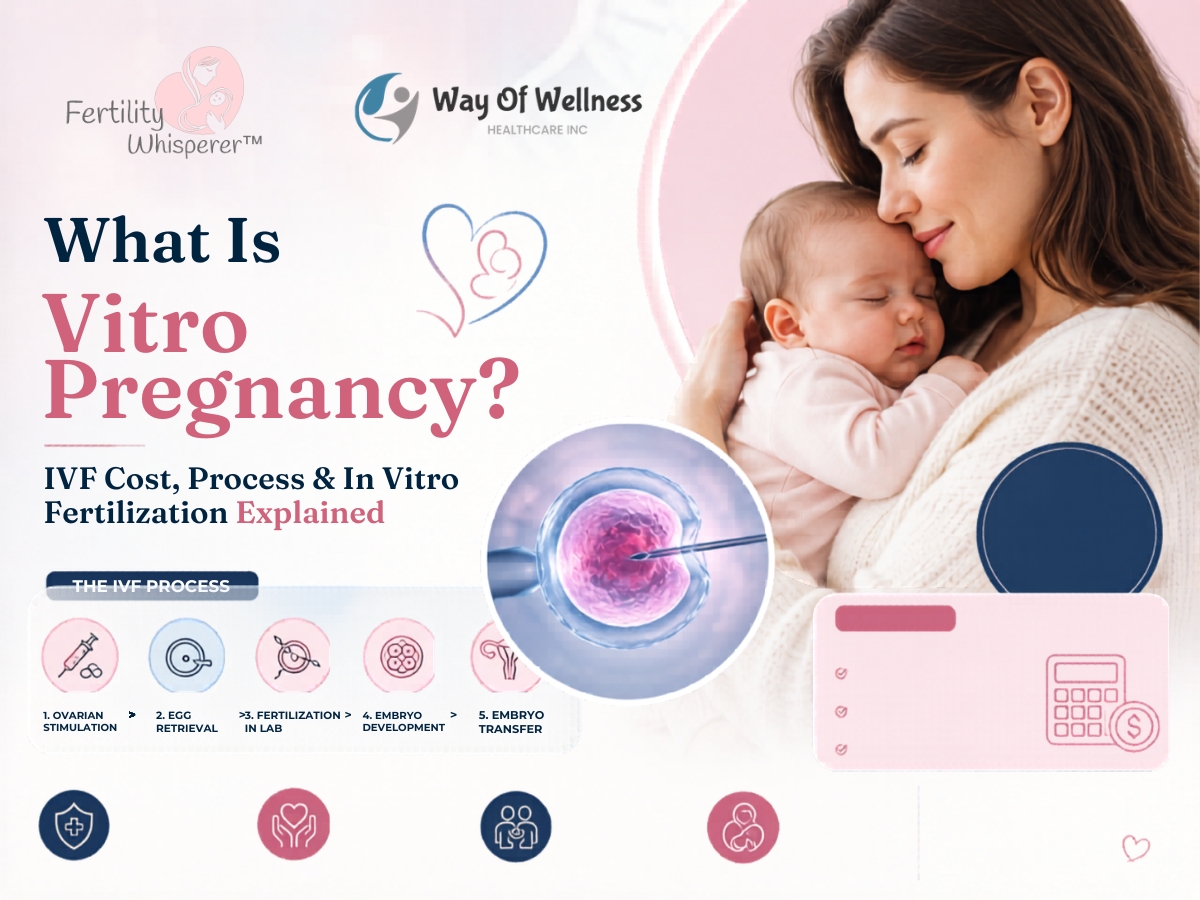
    The IVF procedure is a carefully guided procedure consisting of various steps. Each patient’s treatment will vary but, in general, one cycle is 4 to 8 weeks.

    Step 1: Ovarian Stimulation

    To help the ovary make more than one egg, fertility medications are given to the patient.

    At this point, fertility specialists will track progress by:

    • Ultrasound scans
    • Blood hormone tests
    • Follicle measurements

    The majority of patients will have multiple monitoring visits within a 10-14 day period.

    Step 2: Egg Retrieval

    When eggs are ready to be harvested, a small outpatient surgery is done to retrieve the eggs from the ovaries.

    Typical procedure takes:

    • 20 to 30 minutes
    • Light sedation
    • Same-day recovery
    • Most patients recover from the surgery in 24 hours.

    Step 3: Fertilization in the Laboratory 

    Collected eggs and sperm are then mixed under optimal laboratory conditions.

    Based on the diagnosis of fertility, the specialists can use:

    • Conventional IVF
    • Intracytoplasmic Sperm Injection (ICSI)
    • The embryology team then observes the development of embryos for the next few days.

    Step 4: Embryo Development

    Embryos are monitored for quality and growth.

    Typically:

    • Fertilization will happen in 24 hours or less.
    • Embryos grow for 3-5 days.
    • The embryo with the best quality is chosen to be transferred.

    The rest of the embryos can be stored in a freezer for future use.

    Step 5: Embryo Transfer

    A thin catheter is used to place the embryo in the uterus.

    The procedure:

    • Is usually painless
    • Only takes a few minutes
    • Not anemic, does not need any anesthesia.

    Step 6: Pregnancy Test

    A blood test is used to determine the success of pregnancy and the presence of embryo implantation about 10-14 days after embryo transfer.

    What Is the Vitro Pregnancy Cost?

    One of the most common questions patients ask is about vitro pregnancy cost.

    The total cost varies significantly depending on the clinic, country, medications, and additional services required.

    Typical expenses may include:

    Treatment ComponentEstimated Cost Range
    Initial consultation$100-$500
    Fertility medications$1,500-$5,000
    IVF cycle$8,000-$20,000+
    Genetic testing (optional)$2,000-$6,000
    Embryo freezing$500-$2,000

    Patients should understand that IVF often involves multiple components beyond the treatment cycle itself.

    At Fertility Whisperer™, patients are encouraged to discuss all potential costs upfront to avoid unexpected expenses and make informed decisions.

    What Are the Success Rates of IVF?

    The success of these depends on a number of factors, such as:

    • Age
    • Egg quality
    • Sperm quality
    • Underlying fertility diagnosis
    • Overall health

    Generally, the younger a patient is, the more successful a treatment is likely to be as the quality of an egg decreases as a patient gets older.

    It is crucial to have a realistic expectation. Although IVF is very effective, there are no guarantees of pregnancy.

    Reputable providers of fertility services tend to be more concerned with counseling than promising what they can’t deliver.

    A Realistic Case Study of IVF Journey

    Such a case would be that of a lady aged 34 who has been struggling for two years to conceive.

    From the results of the fertility tests, she underwent IVF because of her blocked fallopian tubes, and this happened through the following procedure:

    Week 1-2: Stimulation of the ovaries

    Week 3: Collection of eggs

    Week 4-5: Implantation of the embryos

    Week 6: A+ Test

    This is a very difficult process, which requires numerous appointments and planning but which has enabled her to fulfill the dream of motherhood. 

    Although individual patients’ situations are very personal, it is good for one to have a rough idea about how long it may take.

    Practical Tips for Patients Considering IVF 

    Here are some things that can help prepare you for IVF pregnancy:

    Choose a reputable fertility specialist

    Choose a clinic which:

    • Offers proper statistics of their successes
    • Explains the treatment processes clearly
    • Tailors plans of treatment

    Complete Suggested Tests

    Conducting more tests on fertility may assist in knowing any challenges that might arise when undergoing treatment and creating the appropriate plans.

    Engage in Healthy Lifestyle Choices

    Before starting treatment:

    • Do not smoke
    • Reduce your alcohol intake
    • Do not put on more weight.
    • Adhere to any doctor’s instructions
    • Take your prenatal vitamins if suggested

    Ask Specific Questions

    One must feel comfortable discussing:

    • Length of treatment process
    • Risks associated with the procedures
    • Cost involved
    • Expectations of success
    • Alternatives to the procedure

    Emotional Preparation

    The IVF treatment process can be emotionally demanding. Having family members and friends in support is important.

    Is There Any Risk of IVF?

    As with any medical procedure, there are some risks associated with IVF.

    Potential risks include:

    • Ovarian Hyperstimulation Syndrome (OHSS)
    • Multiple pregnancy (if multiple embryos are transferred)
    • Procedure-related complications
    • Emotional stress

    But with today’s fertility technologies and a keen eye on patient safety, the danger is much lower.

    Before the treatment is started, your fertility specialist will talk to you about any risks that apply to your case.

    Final Thoughts

    Knowing what vitro pregnancy is  can help reduce the fear of fertility treatment. Since its invention, IVF has revolutionized reproductive medicine and remains a tool that enables people from all over the world to fulfill their dream of having children.

    The price of vitro pregnancy and the treatment itself may differ, but the most important thing to remember is working with fertility experts who are experienced, offer honest advice, give you personalized treatment, and set realistic expectations. Patients can make informed decisions about their fertility journey with the right support and information.

    Author Bio

    Dr. Shasta Ericson is a fertility specialist and reproductive health expert with extensive experience helping individuals and couples navigate infertility challenges. Through patient-centered care, evidence-based fertility guidance, and personalized treatment planning, Dr. Ericson has supported countless families on their path to parenthood. As a contributor to Fertility Whisperer™, she is committed to providing trustworthy, compassionate, and practical fertility education that empowers patients to make informed decisions.

    Frequently Asked Questions

    1. What is vitro pregnancy?

    Vitro pregnancy occurs when a pregnancy is conceived using In Vitro Fertilization (IVF) and fertilization occurs in a laboratory prior to the embryo’s transfer into the uterus.

    2. How long does the IVF process take?

    The standard IVF cycle typically lasts between 4 to 8 weeks, from when the medications are started to receiving a pregnancy test.

    3. What is the average cost of vitro pregnancy?

    The cost of an IVF cycle depends on the location of the clinics, along with the individual needs of the patient, and can range anywhere between $8,000 to $20,000 or even higher, depending on the case, and does not include certain medications or other procedures.

    4. Is IVF painful?

    Most IVF treatment does not cause any discomfort at all. Egg retrieval is done while the patient is sedated and the transfer of embryos is usually rapid and painless.

    5. Is IVF a guaranteed method of pregnancy?

    No. IVF increases the odds of pregnancy, but the success depends upon the age of the woman, the diagnosis of the woman’s infertility, and the quality of the embryo.

  • What Is IVF and How Does It Work? A Step-by-Step, Evidence-Based Guide

    What Is IVF and How Does It Work? A Step-by-Step, Evidence-Based Guide

    IVF (in vitro fertilization) is a technique in medicine whereby an egg is fertilized by sperm in a test tube and inserted into the uterus to conceive. It is among the best fertility treatments that are available in the present, particularly to those couples who have complicated reproductive problems. The IVF process is characterized by a series of well-timed procedures that include ovarian stimulation, retrieval of eggs, fertilization and transfer of embryos.

    IVF to many people and couples is a new hope after months and even years of trying to conceive. Reproductive medicine has taken a step forward and IVF treatment has become more accurate, safe, and accessible than ever. Knowing the medical and practical aspects of IVF may enable you to handle the process with assurance, clarity, and realistic thoughts.

    What Is IVF?

    IVF meaning is in vitro fertilization, where “in vitro” means “in glass.”. Simply, it is the fertilization of an egg using sperm in the laboratory rather than within the body.

    This technique is usually prescribed to:

    • Obstructed fallopian tubes.
    • Low sperm count or motility (male factor infertility)
    • Ovulation disorders
    • Unexplained infertility
    • Age-related fertility decline

    Compared to natural conception, IVF enables fertility specialists to monitor and oversee every step of the reproductive process, enhancing the probability of success.

    Why Is IVF Treatment Done?

    IVF therapy is not necessarily the initial step. Most couples attempt more basic treatments such as medication or intrauterine insemination (IUI) first. IVF is commonly suggested however, when:

    Other interventions have been unsuccessful in 6-12 months.

    • The lady is above 35 and time is of the essence.
    • Genetic issues, where embryos are to be screened.
    • There is severe male infertility.

    Practical understanding: In practice, when a patient has not been able to get pregnant in 2-3 years, they resort to IVF, which is likely to be emotionally and physically draining. IVF provides a way to go with evidence-based approaches.

    Step-by-Step IVF Process

    Learning about the IVF process can help alleviate anxiety and create realistic expectations. The average IVF cycle lasts between 4-6 weeks.

    1. Ovarian Stimulation (10–14 Days)

    You will have to inject hormones to get your ovaries to produce a series of eggs rather than the one egg that is secreted during a natural cycle.

    What to expect:

    • Homely injections daily.
    • Periodic ultrasounds and blood tests.
    • Light side effects such as bloating or mood swings

    Practical suggestion: Injections should be on a regular schedule, and to stay consistent, it is recommended to have a fixed time per day dedicated to injections.

    2. Day Procedure Egg Retrieval

    When the eggs are ready a small surgical operation is carried out to extract the eggs.

    Key details:

    • Performed in mildest trance.
    • Takes about 15–20 minutes
    • None of the significant downtimes (patients bounce back on the same day)

    Real experience signal: It is normal to retrieve 8-15 eggs on average, however, not all eggs will be alive, this is entirely normal.

    3. In Vitro Fertilization

    Sperm and the eggs collected are put together in a controlled laboratory setting.

    Two methods exist:

    • Conventional IVF
    • ICSI (Intracytoplasmic Sperm Injection)

    Outcome insight: On average, approximately 60-70 percent of mature eggs will be fertilized, based on age and sperm quality.

    4. Embryo Development (3–5 Days)

    Growing fertilized eggs (embryos) are tracked.

    Stages include:

    • Day 3: Cleavage stage
    • Day 5: Blastocyst stage

    What is important here: Not every embryo makes it to the blastocyst stage. It is not all about quantity but quality.

    5. Embryo Transfer (Simple Procedure)

    A qualified embryo is inserted into the uterus via a fine catheter.

    What to expect:

    • Painless procedure
    • No anesthesia needed
    • Takes about 10 minutes

    Hint: Following transfer, normal daily activity is usually safe, no bed rest is necessary.

    6. Pregnancy Test (Two-week Wait)

    Pregnancy is confirmed about 10-14 days after embryo transfer, by a blood test.

    Emotional reality: This wait time can be stressful. Staying busy and not over-checking symptoms is beneficial to many patients.

    Success Rates and What Affects Them

    The success rates of IVF are diverse depending on a number of factors:

    • Age: Women younger than 35 years are more successful (approximately 40-50% per cycle).
    • Quality of eggs and sperms.
    • Uterine health
    • Lifestyle (smoking, weight, stress).

    Clear expectation: IVF cannot be used to conceive in a single cycle. Most patients take 2-3 cycles to be successful.

    IVF Risks and Side Effects

    Although IVF is not as risky, one should be aware of the possible risks:

    • Ovarian Hyperstimulation Syndrome (OHSS).
    • Multiple pregnancies
    • Emotional stress

    Practical tip: Select a clinic that is focused on patient education and emotional support; not only on clinical outcomes.

    Realistic Timeline Example

    The following is a common IVF schedule:

    Week 1–2: Ovarian stimulation

    Week 3: Egg retrieval and fertilization.

    Week 4: Embryo transfer

    Week 6: Pregnancy confirmation

    Total time: Approximately 4-6 weeks each cycle.

    Practical Pre-IVF Pointers

    1. Full Fertility Checkup

    Early testing of both partners should be done to determine root causes.

    2. Optimize Your Health

    • Have a normal BMI.
    • Cut down on caffeine and alcohol.
    • Quit smoking

    3. Track Your Cycle

    Knowing your natural cycle can assist in planning.

    4. Ask the Right Questions

    • Success rates of your age group in the clinics.
    • Embryo transfer policies
    • Full cost breakdown

    5. Get ready, both emotionally and financially

    The presence of a support system can help in making the process easier.

    How Fertility Whisperer™ Helps You Navigate IVF

    At Fertility Whisperer™, a brand owned by Way of Wellness Healthcare Inc., emphasis is on merging medical knowledge with individualized treatment. Patients get customized fertility solutions, clear communications, and counseling for their body and mind during the IVF procedure.

    Conclusion

    IVF is an extremely scientific process which has helped many couples around the world to conceive and start their families. Though the whole procedure may appear very complex at first glance, it can be easily comprehended and managed when split into simple steps. If one sets realistic goals, consults a professional and receives appropriate assistance and advice, he or she can benefit from IVF much more than otherwise.

    Those who are planning to use assisted reproduction techniques like IVF should educate themselves and find out everything necessary about the procedure. In this case, they will be able to get the best possible result.

    Frequently Asked Questions (FAQs)

    How Long Does It Take to Do IVF?

    The standard duration of one IVF cycle lasts between 4-6 weeks.

    Is IVF Painful?

    All stages include slight discomfort, but the procedures are pain-free.

    What Are the Odds of Successful IVF Treatment?

    Success rate varies. But for women younger than 35 years old, it lies within 40-50%.

    How many IVF cycles does it usually take to get pregnant?

    Most people may need 1–3 IVF cycles to achieve pregnancy, depending on factors like age, embryo quality, and overall reproductive health.