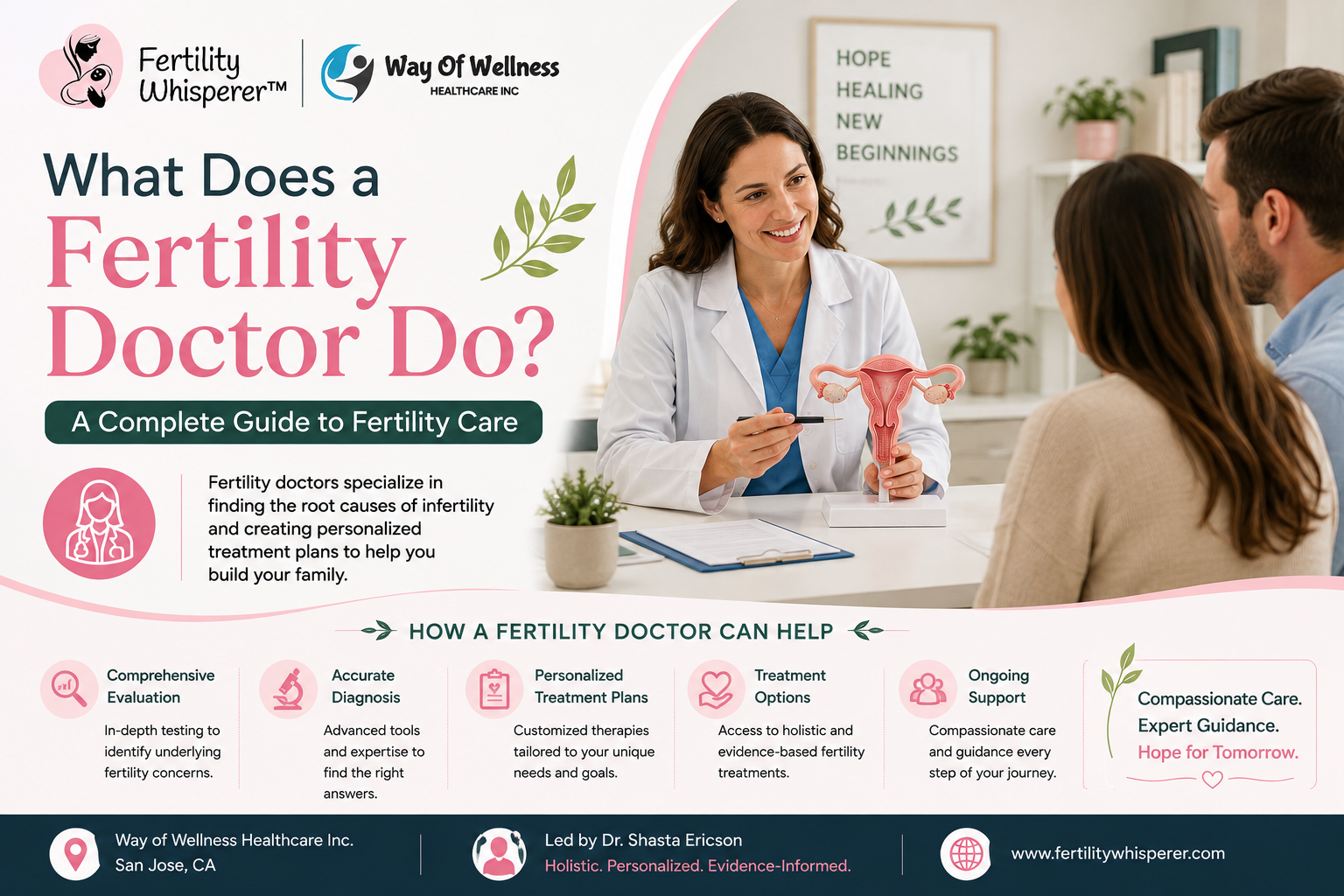
The fertility physician will help you understand the reasons behind infertility and offer you ways in which pregnancy can be achieved. According to your condition, fertility services can range from checking your ovulation, hormones, reproductive health, sperm health, and other factors related to your lifestyle and your pregnancy history in order to suggest the right treatment for you.
Pregnancy can become a difficult issue to solve, as every month you may have questions regarding whether you are ovulating, whether your hormone levels are fine, whether you should wait longer or you need to have IVF treatment. The fertility physician can give structure to all your concerns by identifying any possible factors that influence pregnancy.
It should be noted that visiting the fertility doctor does not always mean that you should immediately have IVF. Some of the best steps that you can take include learning about your menstrual cycle, confirming ovulation, or solving a possible problem.
What Is a Fertility Doctor?
It refers to a doctor specialized in evaluating and addressing any problem associated with conception or pregnancy in a patient.
This can be through conventional fertility medicine where the patient sees an OB-GYN, reproductive endocrinologist, or an infertility doctor. The latter will be able to evaluate the underlying problems within the reproductive system and provide treatments that may include medications, IUI, and IVF.
But fertility medicine can be delivered by other health practitioners dealing with other fields that include nutrition, stress relief, acupuncture, and holistic wellness.
That is why the type of a doctor needed makes a difference when choosing a health practitioner. When searching for a “fertility doctor near me,” the first thing is to know what type of a fertility doctor the person needs.
For instance, one patient might need evaluation by a medical practitioner regarding any problem in conception while another may need fertility care in addition to seeing a reproductive doctor.
When Should You See a Fertility Doctor?
However, there is no one-size-fits-all guideline that applies to everyone.
For most couples, a fertility evaluation is done if the couple has had twelve months of regular, unguarded sex without conception while the woman is younger than 35 years old. For women who are 35 years and above, fertility evaluation is normally suggested after six months. Evaluation might also need to be done earlier if you know that you have fertility issues.
Here are some situations where you might consider getting a professional opinion even before the guidelines:
- Extremely irregular or infrequent periods
- History of endometriosis and pelvic surgery
- Recurrent miscarriages
- PCOS or ovulation problems
- Prior issues regarding reproductive health
- History that could interfere with the production of healthy sperms
- Trouble conceiving after having a baby in the past
- Issues with fertility because of your age
It is crucial to note that this guideline should never be used as an excuse to worry about your infertility.
What Does a Fertility Doctor Do During the First Visit?
Your initial fertility appointment is primarily for information collection rather than commencing treatment right away.
The fertility provider will want to know:
- Age and fertility history
- Cycle length and regularity
- Pregnancy history
- How long you’ve been trying to conceive
- History of fertility investigations or treatment
- Medication and vitamins
- Lifestyle and diet
- Any relevant medical history
- Reproductive history of your partner
Depending on the type of fertility provider and your situation, investigations could consist of blood tests, ultrasounds, ovulation testing, semen analysis, or others.
Practical advice: Bring along past test results to your appointment. If you’ve had blood tests in the last six to twelve months, ultrasounds done, a medication list, and/or prior fertility investigations, this will save you from repeating tests that are unnecessary.
Also helpful is tracking of your menstrual cycles for a minimum of two to three months prior to your fertility appointment. Document the date of onset of your periods, your approximate cycle length, abnormal bleeding, and any ovulation testing you’ve done.
Fertility Care Is About Finding the Right Questions
A major misconception is that fertility treatment is only about discovering one “fertility problem.”
On the contrary, the conception process may be determined by different factors.
For instance, think about a 34-year-old woman whose cycle lengths differ from 27 to 40 days. She tries to conceive for 8 months and thinks that all she needs to do is try “harder” around ovulation time.
However, a proper fertility evaluation could consist of:
- Is she ovulating properly?
- What causes her variable cycles?
- Does she have PCOS or other hormonal problems?
- What about her ovarian reserve?
- Did her husband do a sperm analysis?
- Are there any lifestyle or nutrition issues to discuss?
Such an evaluation is much more efficient than guessing the conception date.
What Tests Might Be Recommended?
Tests depend on age, symptoms, reproductive history, and length of time being fertile.
Tests may include:
Ovulation Testing
Ovulation is crucial for natural conception. Ovulation testing will be done using one of many techniques available depending on the situation to see whether ovulation occurs.
Hormonal Blood Tests
Blood tests may be used to test reproductive hormones or other things related to fertility.
Certain hormonal blood tests need to be conducted at certain times; do not assume all tests can be done at any point during your menstrual cycle.
Fertility testing should not be focused solely on the female patient.
Analysis of sperm count, motility, morphology provides very useful information about the state of the man’s reproductive system. Sperm analysis is usually a fairly simple part of fertility testing.
Ultrasound
A pelvic ultrasound allows an image of the woman’s uterus and ovaries, which helps detect such things as ovarian cysts or uterine fibroids.
Additional Testing
Based on the patient’s medical history, additional tests may be recommended to study the state of fallopian tubes or uterine cavity, etc.
The important thing is to conduct targeted testing.
What Happens After Testing?
The next step after collection of information is to talk about the results and options that are available.
Treatment is very much dependent on what the cause is.
Some possible treatment methods are:
- Cycling and Ovulation Monitoring
- Changing the Lifestyle and Diet
- Ovulation Induction Medication
- Underlying Condition Treatment
- IUI
- IVF
- Fertility Preservation
- Consulting another Specialist
- Alternative Fertility Treatment
It is important to note that not everyone requires the same path to fertility.
A woman who does not ovulate as she should is going to require a completely different treatment path than someone who suffers from either a blocked fallopian tube or some kind of abnormality with the sperm parameters.
What About a Cheap Fertility Doctor?
Looking for a “cheap fertility doctor” makes perfect sense since fertility treatments can get costly, especially when several tests, medications, procedures, and even reproductive techniques are needed.
However, low consultation charges don’t always translate to low overall cost.
When shopping around for a provider, consider the overall treatment process, which includes:
- Consultation charges
- Cost of follow-ups
- Cost of tests
- Cost of medication
- Charges for procedures
- Availability of insurance
- Use of telemedicine
- Review of previously performed tests
- Referrals, where needed
- Always request an estimate where possible.
While a $100 consultation fee might seem high compared to a $50 fee charged by another provider, a $100 consultation that will result in a proper and precise diagnosis will definitely be more helpful than one at $50 without any direction forward.
Another thing to consider is whether the approach used by the provider will suit your case.
How to Find a Fertility Doctor Near Me
“Near me” searches are a good start, although you should consider more than just location when finding a fertility doctor.
Before you make an appointment, you should verify:
Qualifications: Do they have appropriate training and qualifications?
Expertise: Are they experienced working with infertility?
Practice scope: What do they specialize in?
Medically coordinated services: Can they collaborate with a reproductive endocrinologist and fertility clinic if necessary?
Communication: Do they discuss diagnostic tests and treatments with their patients?
Pricing: What services do they provide during an initial consultation?
Next steps: How do they coordinate future consultations?
In the case of complementary fertility care, it is especially critical to realize that complementary care complements and should not substitute a proper medical assessment in cases of infertility or reproductive disorders.
Where Fertility Whisperer™ Fits Into Fertility Care
The Fertility Whisperer™ program takes a holistic fertility-focused approach encompassing wellness, lifestyle, and complementary medicine.
Dr. Shasta Ericson, L.Ac., D.A.O.M., is an acupuncturist and doctor of acupuncture and oriental medicine with over twenty-nine years of experience practicing holistic medicine. She specializes in women’s health and fertility, developing the Fertility Whisperer™ program as well as fertility tools.
It is crucial to consider Dr. Ericson’s credentials: Fertility Whisperer™ must not be considered an alternative to reproductive endocrinology and other forms of medical fertility assistance if diagnostic evaluation and medical treatment are needed.
On the contrary, patients may benefit from complementary fertility assistance.
Questions to Ask Before Choosing a Fertility Provider
Prior to your first visit, you might want to ask the following questions:
- What kind of fertility treatment do you offer?
- What are your qualifications and specializations?
- What kind of testing do you usually conduct at the start?
- Do you collaborate with fertility centers and medical experts?
- How do you know if the treatment is effective?
- What else might I be charged for?
- How often do I need to make follow-up visits?
- In what cases would you suggest visiting a reproductive endocrinologist?
- Is it possible to combine my current medication with complementary therapy?
The answers will reveal many things about the compatibility of this specialist with your situation.
Practical Tips Before Your First Fertility Appointment
It will help if you prepare a bit to make your visit productive.
- Monitor your cycles. Write down cycle dates and any unusual symptoms for at least two to three months.
- Take your medical documentation. Bring previous results of blood tests, ultrasounds, semen analysis, operation reports, and records of your fertility treatment.
- Make a list of medications. Include any medications that you have been taking by prescription or over-the-counter, vitamins, and supplements.
- Put your questions on paper. Fertility visits can be very informative. Writing down your questions will prevent you from forgetting about anything.
- Come with your partner, if you can. Fertility may concern either your partner or both of you; therefore, evaluation should not necessarily start with just one of you.
Find out what is next. Do not leave your visit without learning what should happen next.
Author Bio
Dr. Shasta Ericson, L.Ac., D.A.O.M. is a California-licensed acupuncturist and Doctor of Acupuncture and Oriental Medicine with nearly 30 years of experience in holistic medicine. Her professional focus includes women’s health and fertility, and she has developed fertility-focused education and wellness resources through Fertility Whisperer™. She combines traditional Chinese medicine and natural functional medicine approaches with an emphasis on individualized care and collaboration with conventional reproductive healthcare when appropriate.
The Bottom Line
Not only does a fertility doctor provide fertility treatments. Effective fertility practice begins with knowledge about your reproductive history, determination of what needs to be clarified, selection of relevant tests and development of the treatment plan which takes into account your unique circumstances.
When looking for a fertility doctor, fertility specialist or complementary fertility practitioner, do not limit yourself to price and location alone. Credentials, experience, communication, scope of practice and coordination with other healthcare practitioners are all key factors for quality fertility practice.
Fertility Whisperer™ provides a holistic approach to fertility care by Dr. Shasta Ericson, L.Ac., D.A.O.M., with a focus on female health, fertility, wellness, and personalized care. When dealing with conception, the best move may not be to go for the most invasive treatment right away, but rather to get relevant information. Book Now:- Fertility Whisperer™
Frequently Asked Questions
1. What is a fertility doctor?
A fertility doctor assesses elements that might prevent you from conceiving and recommends a course of action. Based on their qualifications and specialization, this may range from fertility assessments to diagnosis, treatment with medications, assisted reproductive treatment, or referral to another physician.
2. When should I see a fertility doctor?
One of the general recommendations states that you should visit one after 12 months if the woman is younger than 35 and after six months if she is over 35. Early visits are recommended if you have irregular periods, previous fertility issues, pregnancy losses, and other known problems.
3. Will my visit to a fertility doctor imply that I will have to go through IVF?
Not necessarily. IVF is just one option among many fertility treatments. Depending on the reason for your infertility, the treatment can include monitoring, lifestyle changes, medications, IUI, treatment of underlying conditions, or nothing at all at the moment.
4. Is an inexpensive fertility doctor always the best choice?
Maybe not. Think about the overall cost of the service, and not just the initial consultation fee. Think about other factors as well such as qualifications, scope of practice, diagnostic methods, follow-up, and whether the practitioner discloses additional costs.
5. Can holistic fertility treatment take the place of medical fertility treatment?
If there is a possibility of a fertility problem, holistic treatment should never serve as an alternative to the necessary medical diagnosis. Depending on the person and their healthcare providers, holistic treatment might sometimes be combined with medical treatment.
7. What should I bring to my first fertility consultation?
Take all the prior fertility tests, information regarding your menstrual cycle, list of medications, list of supplements, and any medical history that would be important for your doctor to know.